|
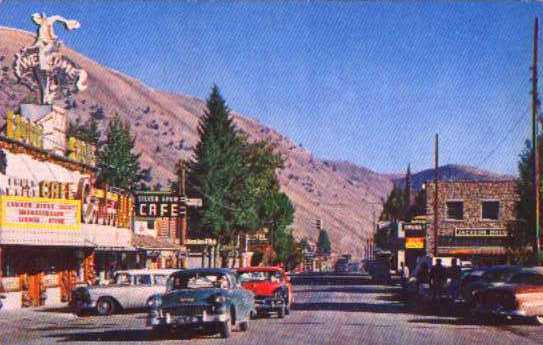
Cache,looking North, 1955
The stone building on the right-hand side of the street is the Jackson Drug Co. at 15 Deloney. The
Jackson Drug was started in 1912 in the Clubhouse by Jim Simpson. Simpson sold the
business in 1922 to Bruce Porter who had previously managed the store. The business advertised that it sold:
Abbie and Irmbrie Fishing tackle,
The best Crane Stationery and tablets,
Baseball Supplies,
a full line of Drugs, Toilet Articles, Stationery, Eastman Kodaks, Kodak Supplies,
Magnesias, Daily Papers, Cigars and Tobacco, Books of all kinds, Candy, Sundries,
Manicure Sets, Jewelry, Post Cards, Souveniers, Nyal Face Cream and A.D. S. Paroxide Cream [The best kinds on the
market] Wall paper Paints, Oils, Jap-a-lac, Varnishes, Alabasters in all colors, Glass cut to order, Glazing etc. We will take orders for anything and will send fountain pens and watches for repair.
Fresh Fruit and Green Vegetables three times a week.
"Jap-a-Lac" was a product manufactured by the Glidden Varnish Co. It came in natural or in "seventeen beatiful colors."
The cans in which it came had a picture of the "Chap Chap" in the label.
In 1920, Porter installed a soda fountain. Not to be out done in Kelly at the same time
the Kelly Mercantile Company installed a soda fountain in the old dance hall. In 1922 Porter opened a movie theatre upstairs over the old drugstore.
The movie theater was closed after two new theatres were opened about 1929. In 1933, Porter purchased on of the theaters the
Rainbow.
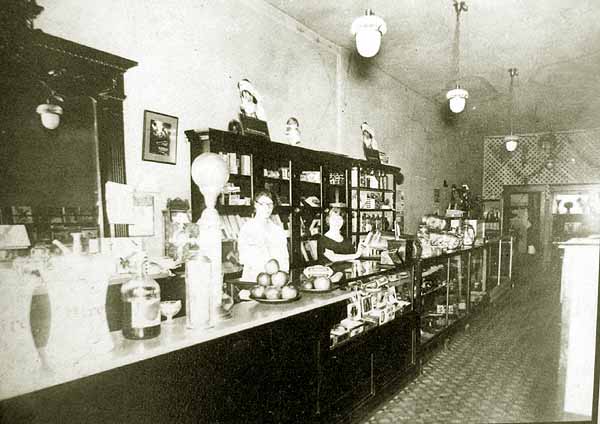
Jackson Drug Co. Soda Fountain, 1920.
. Porter constructed the top building in the
photo in 1937 and moved the soda fountain to the new building. The soda fountain
featured homemade ice cream which was made in the cellar of the building.
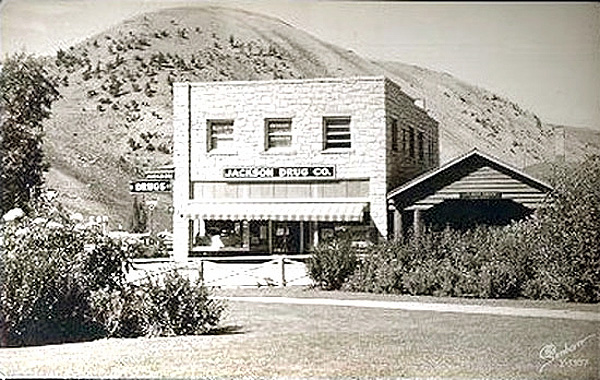
Jackson Drug Co., 1939
The log building to the right of the drugstore is the post office.
With the change in
Jackson during the 1980's rents available for commercial space on the Square rose
dramatically. In 1988, the then owners of the building attempted to evict the
drug store. The courts refused the eviction. In the words of Mr. Justice Cardine of the Wyoming Supreme Court:
The record indicates that Brazelton's motive for attempting to void the lease was
to increase the rent from Jackson Drug, because the rent charged was lower than
rents charged other businesses in the vicinity of Jackson Drug. We have the duty to
sustain the legality of contracts fairly entered into if reasonably possible [citation
omitted]. Absent overreaching, we will not aid one who discovers that he
has made an unwise bargain in entering into a contract [citation omitted].
Brazelton asks us to do just that. We decline the invitation.
Other than the Cowboy Bar, Jackson Drug was the last of the old time businesses on the
square. It closed on October 31, 2001. As of 2013, the building is occupied by a trendy rug
emporium. The soda fountain has been removed.
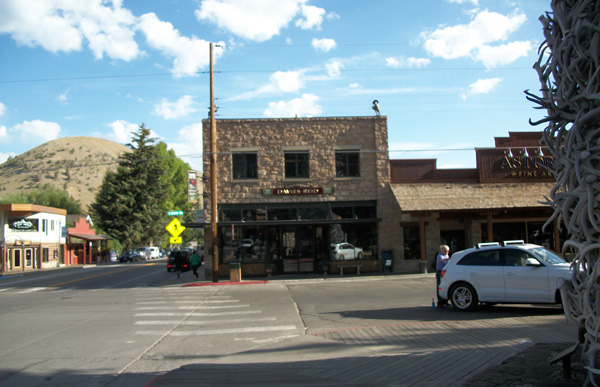
The former Jackson Drug store, 2013. Photo by Geoff Dobson
North of the drugstore at 120 N. Cache is the Teton Theater at 120 N. Cache also constructed by Porter with similar stonework. The stones for
both buildings came from a quarry in Idaho.
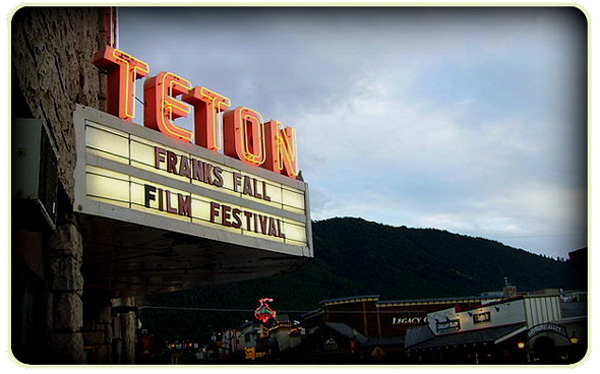
Teton Theater looking toward the intersection of Cache and Deloney.
The theatre hosted the 1963 World Premier of the movie "Spencer's Mountain" filmed with the
Grand Tetons as a backdrop. Photographs of some of the stars are on display in the Wort Hotel. Following the premier a party for some of the
celebraties was held at the Million Dollar Cowboy Bar.
Originally the
theatre did not have a concession stand. Thus, patrons would purchase their
refreshments at the drug store prior to going to the movies. In 2012 the Teton Theatre closed.
Its last movie was "End of Watch." As of August 2013, the marguee still displayed a sign giving a telephone number for
"Movie Info." Following the closure of the Cadillac Grille, discussed on a previous page, its liquor license was moved to the street address of the
theater. This led at the time to speculation that the building might be converted to a restaurant. Frank's Film Festival has been moved to
the Twin Cinema at 295 W. Pearl.
Further north on Cache from the from the Teton Theatre is the Kudar Motel at 260 N. Cache. The Kudar Cabin court was
sonstructed in 1937 by brothers Joseph H. Kudar, Sr. and Max Kudar and their wives Mary G. Kudar and Kate Kudar.
The Kudars had moved to Jackson from Rock Springs in 1934.
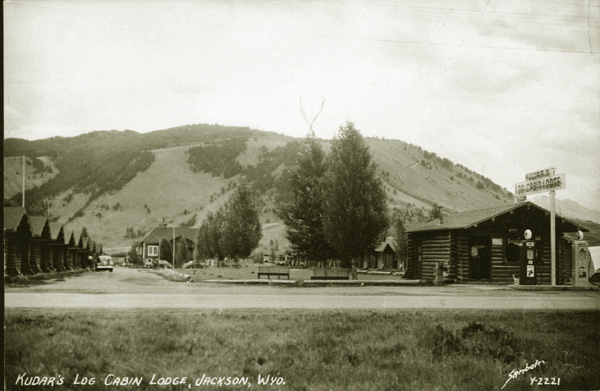
Kudar's Log Cabin Lodge. Approx. 1939. Photo by Wm. P. Sanborn.
The trees in the next photo were planted by Mary Kudar. Mrs. Kudar lived to the age of 98 dying in 2007. The motel is regarded by the
Town of Jackson as a significant historical structure.
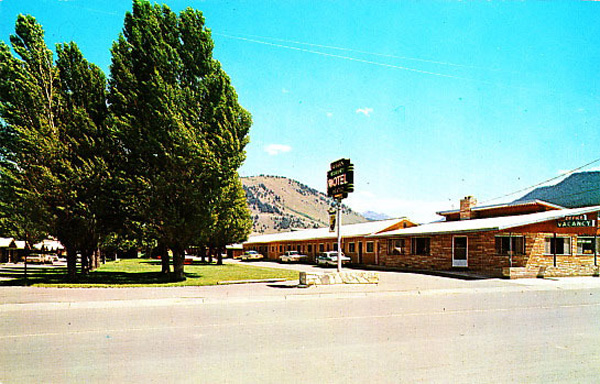
Kudar's Motel, 1970's
Next Page: Jackson continued, Snow King Mountain, The beginnings of Winter Sports.
|